Customized Assessment
We evaluate potential alternatives against applicable regulations, customer requirements, and industry standards to help organizations maintain compliance across global markets.
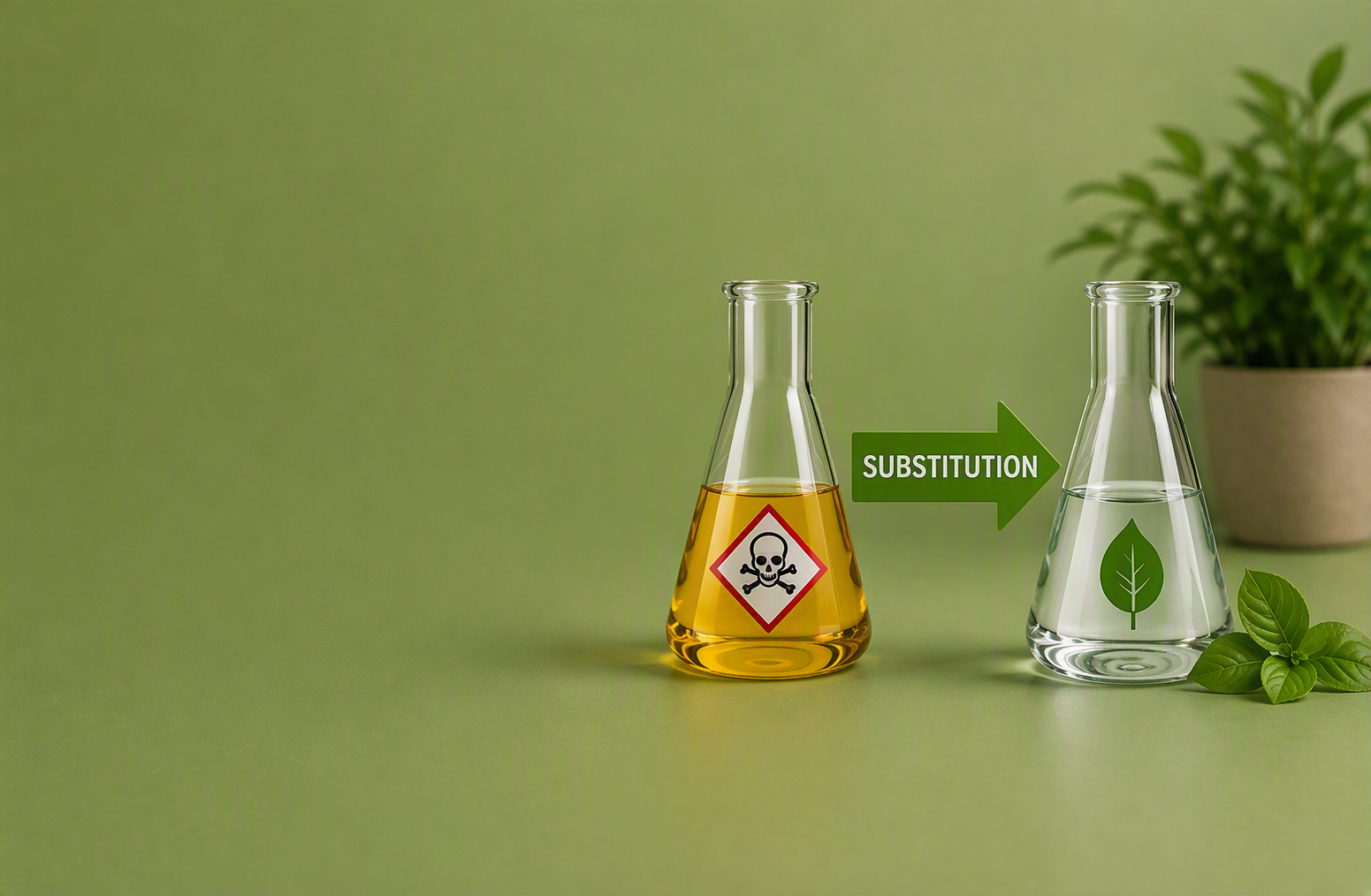


Stay ahead of evolving regulations and strengthen your business with customized chemical substitution solutions that reduce risk, support sustainability, and maintain product performance.

Understand how proposed chemical substitutions align with global regulations, customer specifications, and industry requirements. Our experts help minimize compliance risks and avoid unintended regulatory consequences.

We assess your chemicals, materials, and product formulations to identify practical alternatives that maintain functionality, quality, and performance while supporting sustainability objectives.

From formulation reviews to manufacturing process evaluations, we provide end-to-end support that helps organizations make informed substitution decisions while achieving operational, regulatory, and sustainability goals.

We help organizations evaluate, select, and implement safer chemical alternatives that support regulatory compliance, product performance, and long-term sustainability objectives.

Chemical substitution is the process of replacing hazardous substances in products or manufacturing processes with safer alternatives. It is one of the most effective strategies for reducing regulatory risk, improving sustainability, and supporting safer workplaces and products.
Organizations face increasing pressure from regulators, customers, investors, and other stakeholders to eliminate substances of concern throughout their products and supply chains.
An effective chemical substitution strategy can help organizations:



Dedicated professionals guiding your compliance journey.
![1[1]](https://h2compliance.com/wp-content/uploads/2025/01/11.png)
Chemical substitution projects are often initiated in response to regulatory changes, customer requirements, sustainability commitments, supply chain challenges, product stewardship objectives, or internal risk reduction initiatives.
Potential alternatives are assessed based on:
Yes. Any proposed alternative should undergo appropriate technical evaluations and performance testing to verify that product quality, functionality, safety, and performance requirements are maintained.
Yes. We assess applicable requirements across major global markets to help organizations maintain compliance, preserve market access, and proactively address evolving chemical regulations.